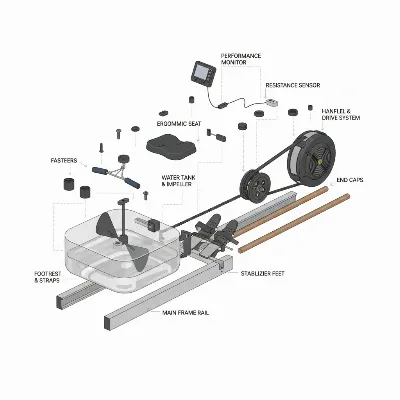
Are you on the quest to find the ideal rowing machine for your home gym, but find yourself navigating a sea of options? Choosing between a water and magnetic resistance rower can feel like a daunting task, as each offers a distinct workout experience. Rowing machines are renowned for delivering a full-body, low-impact workout that engages nearly every major muscle group, making them an excellent investment for cardiovascular health, strength building, and endurance. This comprehensive guide will dissect the nuances of water and magnetic rowing machines, along with other popular types, to help you make an informed decision that aligns perfectly with your fitness aspirations and living situation.
Rowing Machine: Overview and Benefits
A rowing machine, often called a rower, is a fitness apparatus that mimics the action of rowing a boat on water. Historically, rowing has been a staple for athletes due to its efficiency in engaging the entire body. Modern indoor rowers have evolved significantly, bringing this intense yet low-impact workout into homes and gyms worldwide.
There are primarily four types of rowing machines, distinguished by their resistance mechanisms: water, magnetic, air, and hydraulic. Each type offers a unique feel and set of advantages, catering to different preferences and training styles. Regardless of the resistance type, the health benefits of rowing are extensive, encompassing total-body engagement, cardiovascular improvement, muscle strengthening, and endurance building, all with minimal stress on the joints. Rowing can activate up to 86% of your body’s muscles, offering an incredibly efficient workout that burns calories, enhances stamina, and supports overall well-being.
How to Choose the Right Rowing Machine
Selecting the perfect rowing machine is a personal journey, deeply influenced by your individual fitness goals, living environment, and preferences. Understanding what you want to achieve and what each machine type offers is crucial.
Determine Your Needs and Fitness Goals
|
Our Picks for the Best Rowing Machine in 2026
As an Amazon Associate I earn from qualifying purchases.
|
||
| Num | Product | Action |
|---|---|---|
| 1 | Rowing Machine Magnetic Rower with 16 Resistance Levels, Quiet Home Rowing Machine for Cardio Training, APP Connection, 160 kg Load Capacity, Vertical Storage |

|
| 2 | MERACH Rowing Machines for Home, Magnetic Rowing Machine with 16 Levels, Rower Machine of Quiet Resistance, Dual Slide Rail with Max 350lbs Weight Capacity, App Compatible |
|
| 3 | Rowing Machines for Home, 16 Level Adjustable Resistance, Magnetic Rowing Machine with App Supported, 350 LB Weight Capacity, Upgraded Dual Slide Rails with LCD Data Display Screen |
|
| 4 | Rowing Machine,Wenoker Magnetic Rower Machine for Home,App Supported 350 LB Weight Capacity, Smooth Whisper Quiet with LCD Monitor Tablet Holder & Comfortable Seat Cushion, Compact and Saves Space |
|
| 5 | Rowing Machines for Home,Water Rowing Machine with Foldable Design,400LBS Capacity,LCD Monitor,Smooth Glide Rails,Comfortable Seat,Free App(Bluetooth) Supported for Immersive Water Rower&Home Gym |
|
| 6 | Rowing Machine for Home, Magnetic Rower Machine, 350 LB Weight Capacity, 16-Level Silent Resistance Row Machine for Gym Exercise Full-Body Workout Compact Rower with LCD Monitor Tablet Holder |
|
| 7 | Rowing Machine for Home, 350 LB Capacity, 16-Level Silent Resistance, Magnetic Rowing Machines for Home Foldable, Full-Body Workout Compact Rowing Machine for Cardio & Strength with APP Support |
|
| 8 | Rowing Machine,Wenoker Magnetic Rower Machine for Home,App Supported 350 LB Weight Capacity, Smooth Whisper Quiet with LCD Monitor Tablet Holder & Comfortable Seat Cushion, Compact and Saves Space |
|
| 9 | Foldable Rowing Machines for Home with Adjustable Large Water Tank & Comfortable Seat for Real Experience Immersive Water Rower, APP Link,Joint 0 Impact 330LBS Weight Capacity; |
|
| 10 | Rowing Machine for Home, 16 Resistance Levels, Quiet Magnetic Rower with APP, 350 LB Weight Capacity, Easy Assembly, Compact and Saves Space |
|
Before diving into specifications, consider what you hope to gain from your rowing machine. Are you looking to shed pounds, boost your cardiovascular fitness, or build lean muscle? Your experience level—beginner, intermediate, or advanced—will also steer your choice. Furthermore, think about your daily routine; do you prioritize a whisper-quiet workout, a hyper-realistic experience, or precise performance data tracking? Answering these questions will provide a clear roadmap for your selection process.
Understand Different Rowing Machine Types
Each resistance type provides a distinct rowing sensation and set of advantages, making certain machines better suited for specific users.
-
Magnetic Rowing Machine: These machines use a magnetic brake system, often paired with a flywheel, to generate resistance. They are celebrated for their exceptionally quiet operation and smooth, consistent stroke feel. Resistance levels are usually adjustable with a manual dial or digital controls, offering precise, repeatable settings ideal for structured workouts or targeted strength training. Magnetic rowers typically require minimal maintenance and often come with advanced performance monitors and compact, sometimes foldable, designs, making them perfect for apartments or shared living spaces. However, some users might find the mechanical feel less natural compared to rowing on water, and the resistance, while consistent, may not scale as dynamically with effort as other types.
-
Water Rowing Machine: Water rowers replicate the natural sensation of rowing on water by using a flywheel submerged in a tank of water. The resistance is dynamic and scales directly with your effort—the harder you pull, the more resistance you feel, much like rowing an actual boat. Many users find the soothing “whoosh” sound of the water meditative and motivating, and their often wooden frames lend an aesthetic appeal. They provide a realistic, fluid, and low-impact workout, making them gentle on joints. On the downside, water rowers tend to be larger, heavier (especially when filled), and generally more expensive. They also require occasional water treatment to prevent algae growth and their noise, while pleasant, is not as silent as magnetic models. Adjusting the base resistance typically involves adding or removing water, which isn’t practical mid-workout.
-
Air Rowing Machine: Air rowers, like the popular Concept2, generate resistance using a flywheel with fan blades that spin against the air. The resistance is progressive, meaning the harder you row, the more air the fan displaces, and the greater the resistance. This makes them highly responsive and excellent for high-intensity interval training (HIIT) and competitive training. Air rowers offer a dynamic and challenging workout and are known for their durability, often found in commercial gyms. The primary drawback is their noise level, which can be significant due to the air-whooshing sound, potentially making them less suitable for noise-sensitive environments. While they offer good resistance scaling, precise, fixed resistance levels can be harder to maintain than with magnetic systems.
-
Hydraulic Rowing Machine: These are often the most compact and affordable rowing machines, utilizing hydraulic pistons to create resistance. Their small footprint makes them suitable for very tight spaces. While they can be relatively quiet and budget-friendly, hydraulic rowers often offer a less realistic and less smooth rowing experience compared to other types. The resistance can feel less natural, and the range of motion might be restricted, limiting a full-body engagement. They are generally considered an entry-level option for those on a strict budget or with severe space constraints, but may not offer the longevity or workout quality of other models.
Key Factors to Consider
Beyond resistance type, several practical considerations will influence your final decision:
- Size and Weight: Evaluate your available space. Do you need a machine that folds for compact storage, or do you have a dedicated workout area? Water rowers are typically larger and heavier, while many magnetic and hydraulic models are designed with space-saving in mind.
- Resistance Level and Adjustability: Consider your fitness progression. Do you need easily adjustable, precise resistance for varied workouts, or do you prefer a system that scales naturally with your effort? Magnetic rowers offer precise, set levels, whereas water and air resistance depend on your pulling power.
- Monitor Display and Features: Modern rowers often come with advanced consoles tracking metrics like stroke rate, distance, time, calories burned, and heart rate. Some integrate with apps for virtual coaching or workout programs. Decide which data points and connectivity options are important for your motivation and progress tracking.
- Noise Level: This is a significant factor if you live in an apartment, share your living space, or prefer to work out while watching TV. Magnetic rowers are the quietest, followed by water rowers with their soothing sound, while air rowers are the loudest.
- Durability and Material Quality: Investing in a machine built with high-quality materials (e.g., solid wood, aluminum, steel) ensures longevity and a more stable workout experience. This often correlates with the price point, but a durable machine is a worthwhile long-term investment.
- Price: Establish a budget. While hydraulic machines are the most affordable, water and magnetic rowers offer a range of prices depending on features and brand reputation.
Water vs Magnetic vs Air Rowing Machines: A Detailed Comparison
To further clarify the distinctions, let’s look at a comparative table focusing on the most popular resistance types, which should help you visualize the trade-offs involved.
| Feature | Magnetic Rowing Machine | Water Rowing Machine | Air Rowing Machine |
|---|---|---|---|
| Noise Level | Very Quiet (50-65 dB) | Moderate (60-75 dB), pleasant water sounds | Loud (fan noise), can exceed 75 dB |
| Rowing Feel | Smooth, consistent, mechanical, often less “natural” | Natural, fluid, realistic, closely mimics on-water rowing | Dynamic, progressive, challenging, good for power workouts |
| Resistance Mechanism | Magnetic force, precisely adjustable via dial/digital control, fixed levels | Flywheel in water tank, resistance increases with effort; manual water level adjustment | Fan flywheel, resistance increases with stroke speed/intensity; damper setting for “feel” |
| Price Range | Mid-range to high-end ($300-$2000+) | Generally higher-end ($700-$2300+) | Mid-range ($400-$1500+), often considered best value for performance |
| Maintenance | Minimal; wipe down, check bolts | Regular water treatment tablets, periodic tank cleaning, check for leaks | Regular fan blade cleaning, check chain/belt |
| Space/Storage | Often compact, many models are foldable or can be stored upright | Larger footprint, usually less foldable, can be stored upright | Can be bulky, some models fold or separate for storage |
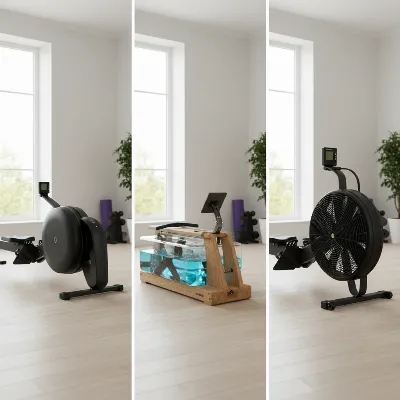 Comparison of water, magnetic, and air resistance rowing machines in a modern home gym setting
Analysis of Pros & Cons from the Comparison
The table highlights that each rower type excels in different areas. Magnetic rowers are the undisputed champions of quiet operation, making them ideal for apartment dwellers or those who prefer to exercise without disturbing others. Their precise resistance levels are a boon for structured training, allowing users to track progress with consistency. However, the mechanical feel may not satisfy purists seeking the “on-water” experience.
Water rowers offer an unparalleled realistic and immersive feel, often becoming a centerpiece in a room due to their aesthetic appeal. The organic resistance and calming sound provide a unique sensory experience. “The feeling of a water rower is truly immersive; it connects you to the natural rhythm of rowing in a way that mechanical resistance simply can’t replicate,” says a seasoned fitness expert. Yet, their larger size, higher cost, and the need for water maintenance are factors to consider.
Air rowers are favored by many for their dynamic resistance, which closely mimics outdoor rowing and adapts to the user’s intensity, making them excellent for challenging, power-focused workouts and HIIT. They are robust and reliable, commonly found in professional settings. Their main drawback is the noise, which can be quite considerable, especially during intense sessions.
Ultimately, your choice will hinge on your priorities. Do you value silence and precise control above all? Or is the authentic feel and soothing sound of water more appealing? Perhaps a dynamic, gym-standard workout is your top concern.
Where to Buy a Rowing Machine: Top Brands
Finding a reputable source and a quality brand are key steps in your purchasing journey.
You can typically purchase rowing machines from major online retailers like Amazon, as well as specialized fitness equipment websites and direct from manufacturer websites. Local sporting goods stores or dedicated fitness equipment showrooms also offer options, sometimes allowing you to try out different models.
When it comes to reputable brands, a few stand out for their quality, innovation, and customer satisfaction:
- Concept2: A leader in air resistance rowers, known for their durability, performance monitors, and use in competitive rowing.
- WaterRower: Celebrated for its elegant wooden water rowers that offer a highly realistic and aesthetically pleasing experience.
- NordicTrack: Offers a range of smart rowing machines, often incorporating magnetic and air resistance, with interactive workout programs.
- Hydrow: Known for its premium water rowers with large HD screens that provide immersive, on-demand coached workouts.
- Yosuda: Provides popular magnetic rowing machines known for their quiet operation and compact designs.
When buying online, always read customer reviews, check the warranty policy, and understand the return policy before making a purchase. This due diligence can save you from potential headaches down the line.
Using and Maintaining Your Rowing Machine
To maximize your rowing experience and ensure the longevity of your machine, proper technique and regular maintenance are essential.
Proper Technique for Effective and Safe Rowing
Correct form is paramount to prevent injury and get the most out of your workout. The rowing stroke consists of four phases:
- The Catch: Sit at the front of the slide, shins vertical, arms extended, core engaged, leaning slightly forward.
- The Drive: Initiate by driving powerfully through your legs, pushing back. As your legs extend, swing your torso back slightly, then pull the handle towards your sternum with your arms.
- The Finish: Legs are extended, torso leans back slightly, handle is at your sternum.
- The Recovery: Reverse the motion smoothly. Extend arms first, then lean forward from the hips, and finally, bend your knees to slide forward to the catch position.
Focus on a strong leg drive, core engagement, and smooth transitions between phases.
Effective Workout Ideas
Rowing offers incredible versatility for your workouts:
- Basic Stroke Drills: Focus on perfecting your form at a moderate pace.
- Interval Training: Alternate between periods of high-intensity rowing and recovery. For example, 1 minute hard, 1 minute easy.
- Long-Distance Endurance: Maintain a steady, moderate pace for 20-45 minutes to build stamina.
- Pyramid Workouts: Gradually increase your distance or time at a higher intensity, then decrease it.
Essential Maintenance Tips
Routine maintenance will extend the life of your rowing machine:
- Magnetic Rowers: These require minimal maintenance. Regularly wipe down the rail and frame to prevent dust and sweat buildup. Periodically check that all bolts and connections are secure.
- Water Rowers: The water in the tank needs attention. Use purification tablets (usually provided by the manufacturer) every few months to prevent algae and bacteria growth. Check the tank regularly for any leaks.
- Air Rowers: The fan cage and blades can accumulate dust. Use a vacuum or cloth to clean the fan regularly to ensure smooth operation and optimal resistance. Lubricate the chain (if applicable) as per the manufacturer’s instructions.
- General Maintenance: For all types, keep the monorail clean to ensure the seat slides smoothly. Check that the foot straps and handle are in good condition.
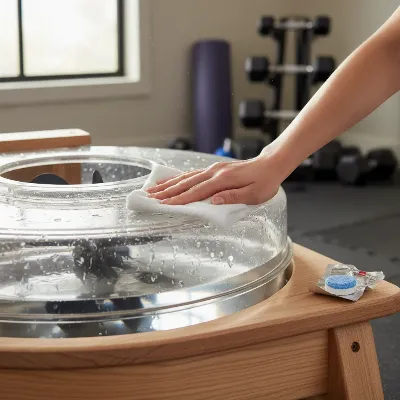 Person cleaning a water rowing machine tank, emphasizing maintenance
Buying Guide: Final Considerations for Your Rower Purchase
As you near your decision, let’s distill the most crucial factors to help you make your ultimate choice.
When investing in a rowing machine, always consider your budget first. While a higher price often correlates with more features and durability, excellent options exist across all price points. Next, meticulously evaluate your available space and whether a foldable or upright storage model is essential for your home. Your tolerance for noise is another critical differentiator; magnetic rowers are ideal for silent operation, while water and air rowers offer a more immersive, yet audible, experience. Remember to match the resistance type to your personal fitness goals—precision for structured training (magnetic), realism for immersion (water), or dynamic challenge for power (air).
For beginners, a magnetic rower might be an excellent starting point due to its quiet operation and easily adjustable, consistent resistance levels, which allow for a focus on mastering proper form without the added complexity of dynamic resistance. No matter your level, always prioritize learning the correct rowing technique from the outset to prevent injuries and maximize workout effectiveness.
Common mistakes to avoid include: purchasing a machine that is too large for your space, underestimating the importance of noise level in your environment, neglecting regular maintenance (especially for water rowers), and failing to grasp proper form, which can lead to inefficient workouts or even injury. By taking these considerations to heart, you can confidently select a rowing machine that will be a rewarding addition to your fitness routine for years to come.
Conclusion
Choosing the right rowing machine—be it a water, magnetic, or even an air model—is a pivotal decision for anyone committed to their home fitness journey. Water rowers excel in providing a uniquely realistic and immersive experience with their natural resistance and soothing sounds, while magnetic rowers stand out for their whisper-quiet operation and precise, adjustable resistance for structured training. Air rowers offer a dynamic, gym-quality workout, albeit with more noise. The “best” rowing machine is ultimately subjective, tailored to your unique priorities, budget, space, and personal preferences for feel and functionality.
By carefully weighing these factors, from the feel of the resistance to the hum of its operation, you can select a rowing machine that not only meets your fitness goals but also seamlessly integrates into your lifestyle. What aspect of your rowing machine experience matters most to you?
Frequently Asked Questions
Is a rowing machine a good full-body workout?
Absolutely, rowing machines provide one of the most comprehensive full-body workouts available, engaging approximately 86% of your body’s muscles across your legs, core, and upper body in a single, fluid motion, making it highly efficient for strength and cardiovascular health.
How much space does a rowing machine need?
The space required varies by model. While some magnetic and hydraulic rowers are compact and foldable, water and air rowers generally require a larger footprint, typically ranging from 7 to 9 feet in length and 2 to 3 feet in width during use. Many models can be stored upright to save space.
Are water rowers noisy?
Water rowers produce a moderate, whooshing sound as the paddles move through water. Many users find this rhythmic sound soothing and meditative, likening it to rowing on actual water. They are generally quieter than air rowers but not as silent as magnetic models.
Can beginners use a rowing machine?
Yes, rowing machines are excellent for beginners due to their low-impact nature and ability to provide a full-body workout. However, it is crucial for beginners to focus on learning proper technique to maximize benefits and avoid injury. Magnetic rowers, with their consistent and adjustable resistance, can be particularly beginner-friendly.
How often should I maintain my water rower?
Water rowers typically require maintenance every few months. This usually involves adding a water purification tablet to the tank to prevent algae and bacteria buildup. You should also periodically check the water level and inspect the tank for any leaks, along with general cleaning of the frame and rail.
What is the most natural-feeling rowing machine?
Water Rowing Machines are widely considered to offer the most natural and realistic rowing experience, as their resistance mechanism directly simulates the dynamics of rowing on actual water. The resistance increases with your effort, mirroring the feel of an outdoor boat.