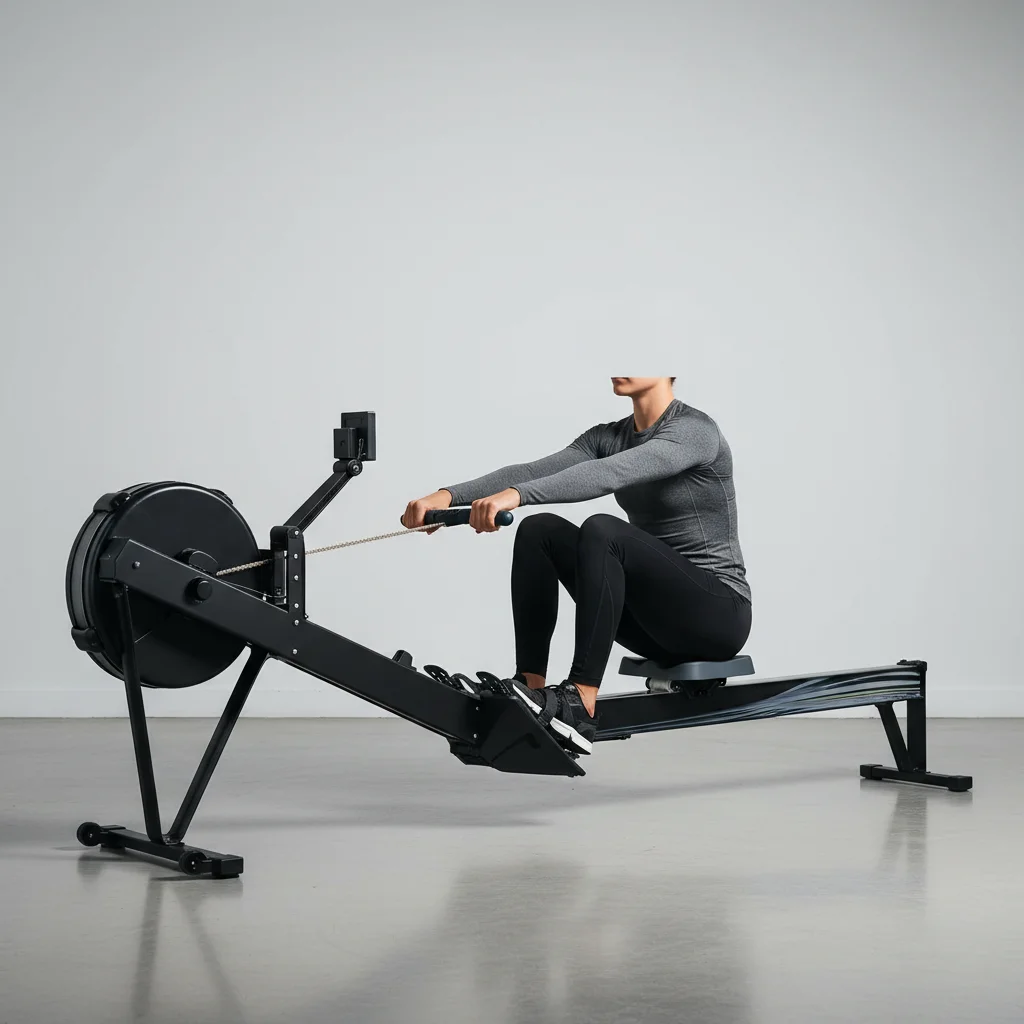
Perfecting your rowing machine form is crucial for maximizing efficiency and preventing injury. A properly executed stroke involves four distinct phases: the catch, the drive, the finish, and the recovery. Mastering these phases ensures you engage the correct muscle groups and achieve a powerful, fluid motion, ultimately leading to better workout results and a more enjoyable experience.
Understanding the Four Phases of a Rowing Stroke
The rowing stroke is a continuous, cyclical movement that can be broken down into four main phases. Each phase plays a vital role in generating power and maintaining momentum. Incorrect execution in any phase can lead to wasted energy and potential strain on your body. For best home fitness roundups on this site.
The Catch: Setting Up for Success
The catch is the starting position of your stroke. Your knees should be fully bent, shins vertical, and arms extended forward, gripping the handle. Your torso should be leaning slightly forward from the hips, with your shoulders relaxed. It’s essential to engage your core and maintain a strong, stable position before initiating the drive. Think of it as coiling a spring, ready to release energy.
The Drive: Powering Through
The drive is where the majority of the power is generated. Begin by pushing off with your legs, extending them powerfully. As your legs extend, lean back slightly from your hips and pull the handle towards your sternum, engaging your back and arm muscles. The sequence is crucial: legs, then core, then arms. Avoid pulling with your arms too early, as this reduces the power generated by your larger leg muscles.
- Push off strongly with your legs.
- Engage your core as you lean back.
- Pull the handle to your sternum.
- Maintain a smooth, continuous motion.
- Keep your elbows close to your body.
The Finish: Completing the Stroke
|
Our Picks for the Best Rowing Machine in 2026
As an Amazon Associate I earn from qualifying purchases.
|
||
| Num | Product | Action |
|---|---|---|
| 1 | Rowing Machine,Wenoker Magnetic Rower Machine for Home,App Supported 350 LB Weight Capacity, Smooth Whisper Quiet with LCD Monitor Tablet Holder & Comfortable Seat Cushion, Compact and Saves Space |

|
| 2 | MERACH Rowing Machines for Home, Magnetic Rowing Machine with 16 Levels, Rower Machine of Quiet Resistance, Dual Slide Rail with Max 350lbs Weight Capacity, App Compatible |
|
| 3 | Rowing Machine for Home, Magnetic Rower Machine, 350 LB Weight Capacity, 16-Level Silent Resistance Row Machine for Gym Exercise Full-Body Workout Compact Rower with LCD Monitor Tablet Holder |
|
| 4 | Rowing Machines for Home,Water Rowing Machine with Foldable Design,400LBS Capacity,LCD Monitor,Smooth Glide Rails,Comfortable Seat,Free App(Bluetooth) Supported for Immersive Water Rower&Home Gym |
|
| 5 | Rowing Machine for Home, 16 Resistance Levels, Quiet Magnetic Rower with APP, 350 LB Weight Capacity, Easy Assembly, Compact and Saves Space |
|
| 6 | Rowing Machines for Home, 16 Level Adjustable Resistance, Magnetic Rowing Machine with App Supported, 350 LB Weight Capacity, Upgraded Dual Slide Rails with LCD Data Display Screen |
|
| 7 | Foldable Rowing Machines for Home with Adjustable Large Water Tank & Comfortable Seat for Real Experience Immersive Water Rower, APP Link,Joint 0 Impact 330LBS Weight Capacity; |
|
| 8 | Rowing Machine,Wenoker Magnetic Rower Machine for Home,App Supported 350 LB Weight Capacity, Smooth Whisper Quiet with LCD Monitor Tablet Holder & Comfortable Seat Cushion, Compact and Saves Space |
|
| 9 | Rowing Machine for Home, 350 LB Capacity, 16-Level Silent Resistance, Magnetic Rowing Machines for Home Foldable, Full-Body Workout Compact Rowing Machine for Cardio & Strength with APP Support |
|
| 10 | Rowing Machine Magnetic Rower with 16 Resistance Levels, Quiet Home Rowing Machine for Cardio Training, APP Connection, 160 kg Load Capacity, Vertical Storage |
|
At the finish of the stroke, your legs should be fully extended, your torso leaning back slightly (around 11 o’clock if your starting position was 12 o’clock), and the handle should be at your sternum. Your elbows should be pointing slightly outwards, and your shoulders should be relaxed. This position allows for a brief moment of rest before the recovery phase begins.
The Recovery: Preparing for the Next Stroke
The recovery phase is the reverse of the drive and finish. Begin by extending your arms forward, away from your body. Once your arms are fully extended, pivot forward from your hips, allowing your torso to lean forward. Finally, bend your knees to slide the seat forward, returning to the catch position. The recovery should be controlled and smooth, allowing your muscles to prepare for the next powerful drive. This phase is often overlooked but is critical for maintaining rhythm and efficiency.
Many rowers find that focusing on a consistent stroke rate and smooth transitions between phases significantly improves their overall performance. Consider using a mirror or recording yourself to identify areas for improvement in your form.Regularly reviewing your technique can help you refine your movements and prevent bad habits from forming.
Common Rowing Form Mistakes to Avoid
Several common mistakes can hinder your rowing performance and increase the risk of injury. One frequent error is
Equipment that holds up past 60 sessions
Free PDF — 60-session wear log template + 5 treadmills compared.

This breakdown of the drive and finish phases was super helpful. I used to rush through them, but really concentrating on pushing with my legs first and then leaning back has improved my power. My only minor complaint is that I wish there were more visual examples for each phase, but the descriptions are clear.
I appreciate the detailed explanation of the recovery phase. I always struggled with making it smooth and controlled. While the tips are good, I found it a bit hard to translate some of the nuances into my actual stroke without a coach. Still, it’s a solid guide for anyone trying to improve their form.
This really helped me understand why my lower back was sometimes sore after a long session. I realized I was neglecting the proper torso lean during the drive. Focusing on engaging my core and maintaining that slight backward lean has made my rows so much more comfortable and effective. No more back pain!
I’ve been rowing for a while but always felt like I wasn’t getting the most out of it. Focusing on the ‘catch’ phase as described here made a huge difference. My shins are actually vertical now and I feel a much stronger connection to the machine. Definitely seeing better results in my workouts!