To keep your rowing machine performing like new, consistent maintenance is essential, including daily wiping, weekly inspections, and monthly lubrication of moving parts. Neglecting these steps can lead to premature wear, reduced performance, and costly repairs. For example, Concept2 rowers require chain lubrication every 50 hours of use with mineral oil, while water rowers need a purification tablet every 6 months to prevent algae growth. Adhering to a structured maintenance routine ensures longevity and optimal functionality for your fitness investment.
Rowing Machine: Overview and Benefits
Rowing machines, often called ergometers, simulate the action of rowing a boat on water, providing an incredible full-body workout. They engage approximately 85% of your body’s muscles, including your legs, core, back, and arms, making them highly efficient for calorie burning and muscle development.
There are several main types of rowing machines, each offering a distinct feel and resistance mechanism:
- Air Rowers: These use a flywheel with fan blades that spin against air to create resistance. The harder you row, the more resistance you feel. They are known for providing a smooth, consistent stroke, but can be louder.
- Water Rowers: Featuring a tank filled with water and paddles, these machines mimic the natural feel and sound of rowing on water. Resistance increases with the intensity of your stroke, and they are generally quieter than air rowers, offering an immersive experience.
- Magnetic Rowers: Utilizing a magnetic brake system, these provide adjustable, quiet resistance. They are often compact and offer a very smooth, consistent stroke, though some users might find the resistance less “natural” than air or water models.
- Hydraulic Rowers: These compact and often more affordable machines use hydraulic cylinders to create resistance. They can be a good option for small spaces, but may not offer the same full-body engagement or smooth stroke as other types.
The benefits of regular rowing are extensive. It’s an excellent cardiovascular workout, strengthening your heart and lungs. It builds muscular endurance and strength across major muscle groups without harsh impact on your joints. Rowing can significantly contribute to weight loss and improved body composition, making it a versatile addition to any fitness regimen.
Essential Maintenance Tips for Your Rowing Machine
Maintaining your rowing machine doesn’t have to be a chore. A consistent routine of care can drastically extend its lifespan and ensure every workout is as effective and enjoyable as the first.
Daily and Weekly Upkeep
Simple habits performed regularly can prevent bigger problems down the line.
- Wipe Down After Every Workout: Sweat contains salts and acids that can corrode metal parts, damage finishes, and lead to rust over time. After each session, use a soft, damp cloth with a mild cleaning solution or a gentle fitness equipment wipe to clean the seat, handle, footrests, and main rail. Always dry the surfaces thoroughly to prevent moisture damage.
- Clean the Monorail and Seat Rollers: The monorail, where the seat slides, can accumulate dust, dirt, and debris, leading to a gritty feel or sticky movement. Wipe the monorail with a dry cloth after every few workouts. Periodically, use a mild detergent and water, then ensure it’s completely dry. Inspect the seat rollers for any lodged debris and ensure they spin freely. Most modern rowers use self-lubricating bearings, so avoid lubricating the monorail unless specifically recommended by the manufacturer.
- Inspect for Loose Parts: Vibration from vigorous workouts can cause bolts, screws, and other fasteners to loosen over time. Take a moment after each workout to quickly check for any wobbling or rattling components, paying close attention to the foot pedals, handle connection, and frame joints. Tighten them as needed to maintain stability and safety.
Monthly and Quarterly Checks
|
Our Picks for the Best Rowing Machine in 2026
As an Amazon Associate I earn from qualifying purchases.
|
||
| Num | Product | Action |
|---|---|---|
| 1 | Foldable Rowing Machines for Home with Adjustable Large Water Tank & Comfortable Seat for Real Experience Immersive Water Rower, APP Link,Joint 0 Impact 330LBS Weight Capacity; |

|
| 2 | Rowing Machine Magnetic Rower with 16 Resistance Levels, Quiet Home Rowing Machine for Cardio Training, APP Connection, 160 kg Load Capacity, Vertical Storage |
|
| 3 | Rowing Machine,Wenoker Magnetic Rower Machine for Home,App Supported 350 LB Weight Capacity, Smooth Whisper Quiet with LCD Monitor Tablet Holder & Comfortable Seat Cushion, Compact and Saves Space |
|
| 4 | Rowing Machine for Home, 16 Resistance Levels, Quiet Magnetic Rower with APP, 350 LB Weight Capacity, Easy Assembly, Compact and Saves Space |
|
| 5 | Rowing Machines for Home, 16 Level Adjustable Resistance, Magnetic Rowing Machine with App Supported, 350 LB Weight Capacity, Upgraded Dual Slide Rails with LCD Data Display Screen |
|
| 6 | MERACH Rowing Machines for Home, Magnetic Rowing Machine with 16 Levels, Rower Machine of Quiet Resistance, Dual Slide Rail with Max 350lbs Weight Capacity, App Compatible |
|
| 7 | Rowing Machine,Wenoker Magnetic Rower Machine for Home,App Supported 350 LB Weight Capacity, Smooth Whisper Quiet with LCD Monitor Tablet Holder & Comfortable Seat Cushion, Compact and Saves Space |
|
| 8 | Rowing Machine for Home, 350 LB Capacity, 16-Level Silent Resistance, Magnetic Rowing Machines for Home Foldable, Full-Body Workout Compact Rowing Machine for Cardio & Strength with APP Support |
|
| 9 | Rowing Machines for Home,Water Rowing Machine with Foldable Design,400LBS Capacity,LCD Monitor,Smooth Glide Rails,Comfortable Seat,Free App(Bluetooth) Supported for Immersive Water Rower&Home Gym |
|
| 10 | Rowing Machine for Home, Magnetic Rower Machine, 350 LB Weight Capacity, 16-Level Silent Resistance Row Machine for Gym Exercise Full-Body Workout Compact Rower with LCD Monitor Tablet Holder |
|
These tasks require a bit more attention but are crucial for the long-term health of your machine.
- Lubricating Moving Parts: Depending on your rowing machine type, certain moving parts will require lubrication.
- Chain (Concept2 and similar models): For chain-driven rowers like the Concept2, lubrication is vital every 50 hours of use, or more frequently if used heavily or in a dusty environment. Apply a teaspoon of purified mineral oil, 3-in-One oil, or 20W motor oil to a cloth or paper towel, then wipe it along the entire length of the chain. It’s important to wipe off any excess and never use cleaners or solvents like WD-40, as they can damage the chain.
- Seat Rollers/Bearings: If your manufacturer recommends it, apply a small amount of silicone oil or mineral oil to the seat chassis wheels every 1-3 months. Slide the seat up and down the rail to distribute the oil evenly.
- Inspect Resistance System:
- Air Rowers: Check the fan area for dust or debris accumulation. Vacuum the flywheel enclosure if necessary to ensure optimal airflow and consistent resistance.
- Magnetic Rowers: Ensure the magnets are clean and free from obstruction.
- Water Rowers: The water in the tank needs periodic attention. Add a water purification tablet every 6 months, or every 3-4 months if the rower is in direct sunlight, to prevent algae and bacteria growth. If the water becomes discolored and doesn’t clear after adding a tablet, empty the tank using a siphon pump, flush it with clean water, and refill, adding a new tablet. Crucially, never use chlorine bleach in the tank, as it can irreparably damage the polycarbonate material.
- Check Display Console and Electrical Connections: Ensure the monitor is functioning correctly and displaying accurate data. Check batteries for models that require them and replace them as needed. For models with electronic resistance or programs, inspect the power cable and connections for any signs of wear or damage.
Long-Term Care and Storage
Consider these practices to truly protect your investment.
- Annual Servicing: If your rowing machine sees heavy use, consider a professional service once a year. Technicians can inspect internal components, ensuring everything is in proper working order and addressing any issues before they become major problems.
- Proper Storage: When not in use, store your rowing machine in a dry, dust-free environment. Avoid exposing it to extreme temperatures, direct sunlight, or high humidity, as these conditions can lead to rust, material degradation, or damage to electronic components. If storing in a garage or basement where humidity might be an issue, consider a protective cover to shield the machine from moisture and dust.
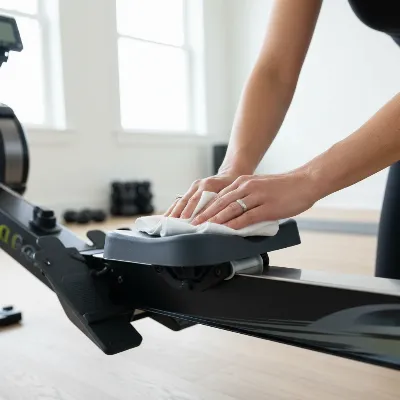 A person wiping down a rowing machine after a workout with a cloth, focusing on the seat and rail.
Troubleshooting Common Rowing Machine Issues
Even with regular maintenance, minor issues can arise. Knowing how to troubleshoot common problems can save you time and keep your workouts uninterrupted.
Seat Glide Problems
If your seat feels rough or sticky, first clean the monorail thoroughly to remove any accumulated dust or debris. Check the seat rollers for damage or foreign objects. For some models, a light application of silicone-based lubricant to the roller axles (as per manufacturer instructions) might restore smooth operation.
Handle Recoil Issues
Should the handle not return smoothly or completely, the recoil system often needs attention. This is typically managed by a bungee cord or spring. Inspect the cord for signs of wear, fraying, or slack. If it appears loose, consult your user manual for instructions on how to tighten or adjust the bungee cord tension. If damaged, it may need replacement.
Resistance Irregularities
Inconsistent or incorrect resistance can significantly impact your workout quality.
- Air and Magnetic Rowers: Check that the damper setting or resistance knob is correctly adjusted. For air rowers, a dirty flywheel enclosure can reduce resistance; clean it out. For magnetic rowers, ensure there are no obstructions hindering the magnet’s movement.
- Water Rowers: Insufficient water in the tank will lead to weak resistance. Check the water level and refill if needed. Air bubbles in the tank can also affect resistance; rotating the tank can help dislodge them.
- General Resistance Issues: Common culprits can include dirty flywheels, worn shock cords, or misaligned rails. Regularly cleaning these components and checking for wear can prevent many resistance problems.
Monitor Inaccuracies
If your rowing machine’s display is showing incorrect data (e.g., stroke rate, distance, calories), start by checking the batteries and replacing them if necessary. Loose wiring or a misaligned sensor can also cause inaccurate readings. Inspect the sensor, typically located near the flywheel or pulley, and ensure it is securely positioned and connected.
Unusual Noises
Strange noises like rattling, grinding, or squeaking during your workout can indicate underlying issues.
- Rattling/Grinding: Often points to loose bolts or worn-out bearings. Systematically tighten all visible bolts and screws. If the noise persists, further inspection of the moving parts and their bearings might be necessary.
- Squeaking: Can be a sign of insufficient lubrication. Refer to your manual to identify parts that require oiling, such as chains or specific pivot points, and apply the recommended lubricant.
Maximizing Your Investment: A Maintenance Buying Guide Perspective
When considering a new rowing machine, thinking about maintenance upfront can help you make a smarter, more durable purchase.
- Material Quality and Build Durability: Look for machines constructed from high-quality materials that promise longevity. Stainless steel, robust aluminum, or durable hardwood frames are indicators of a machine built to withstand regular use and minimize wear. A well-built machine will naturally require less frequent intense maintenance.
- Maintenance Needs by Type: Each resistance type has different maintenance considerations.
- Water Rowers are visually appealing but require periodic water purification and, eventually, tank cleaning.
- Air Rowers need regular flywheel cleaning to maintain consistent resistance.
- Magnetic Rowers often boast the lowest maintenance, typically only requiring general cleaning and bolt checks.
- Hydraulic Rowers may need attention to their cylinders over time. Understand these differences to choose a machine whose maintenance requirements align with your willingness to perform them.
- Manufacturer Support and Warranty: A reputable manufacturer will offer clear maintenance guidelines in their user manual, provide readily available replacement parts, and offer excellent customer support. A strong warranty also signals the manufacturer’s confidence in their product’s durability, providing peace of mind. Always review the manual before purchase to understand the recommended care and any specific requirements that might affect warranty coverage.
“A well-maintained rowing machine isn’t just a joy to use; it’s a shows preserving your investment and ensuring every stroke contributes optimally to your fitness journey.” – Admin, Reviewtifull.com, Rowing Machine Expert
Conclusion
Regular maintenance is not merely an optional chore but a critical aspect of owning a rowing machine. By dedicating a small amount of time to daily wipes, weekly inspections, and periodic lubrication and checks, you actively protect your investment, enhance performance, and ensure a safer, more enjoyable workout experience. From wiping away corrosive sweat to ensuring your water rower’s tank remains pristine, each step contributes to the longevity and efficiency of your equipment. Always consult your specific model’s user manual for detailed guidance, as manufacturers often have unique recommendations for their products. Embrace these essential maintenance tips, and your rowing machine will continue to be a powerful ally in your pursuit of health and fitness.
Frequently Asked Questions
How often should I clean my rowing machine for optimal performance?
You should wipe down high-contact areas like the seat and handle after every use to remove sweat and prevent corrosion. A more thorough cleaning of the monorail and inspection of components is recommended weekly or bi-weekly, depending on usage frequency, to ensure smooth operation.
What type of lubricant is safe to use on a rowing machine chain?
It's crucial to use the lubricant recommended by your machine's manufacturer. For chain-driven Concept2 rowers, purified mineral oil, 3-in-One oil, or 20W motor oil are recommended, applied with a cloth every 50 hours of use. Avoid strong solvents or cleaners like WD-40, as they can damage the chain.
What steps should I take if my water rower's tank water becomes discolored?
If your water rower's tank water becomes cloudy or green, add a water purification tablet immediately. If the discoloration persists, you may need to empty the tank using a siphon pump, flush it with clean water, and then refill it, adding a new purification tablet. Never use chlorine bleach in the tank, as it can irreparably damage the polycarbonate material.
How can I prevent my rowing machine's seat from sticking or feeling rough?
To prevent the seat from sticking, thoroughly clean the monorail after every few workouts to remove dust and debris. Inspect the seat rollers for any lodged objects and ensure they spin freely. Some manufacturers may recommend a light application of silicone-based lubricant to the roller axles.
What causes resistance irregularities in air and magnetic rowing machines?
In air rowers, a dirty flywheel enclosure can reduce resistance, so vacuuming it out is often necessary. For magnetic rowers, ensure the magnets are clean and free from obstruction. Always check that the damper setting or resistance knob is correctly adjusted for your desired intensity.
Equipment that holds up past 60 sessions
Free PDF — 60-session wear log template + 5 treadmills compared.

I just got a new water rower and was looking for some solid maintenance tips. This was super helpful, especially the detail about preventing algae growth with the purification tablets. I want to make sure my machine stays clean and functional for a long time, and these steps seem easy enough to incorporate into my routine. Thanks for the clear guidance!
This was a good reminder about how important regular upkeep is for these machines. I’ve definitely noticed a difference in performance when I slack off. The point about monthly lubrication of moving parts is something I need to be more consistent with. It’s a significant investment, so making sure it lasts is key to getting my money’s worth.
I’ve had my Concept2 for years and it’s still going strong, largely thanks to following a good maintenance schedule. The tip about lubricating the chain every 50 hours with mineral oil is spot on. It really makes a difference in how smooth the machine feels and prevents any grinding noises. Definitely worth the small effort to keep such a great piece of equipment in top shape.
I appreciate the advice on keeping my rower in good condition. I’ve been pretty good about the daily wiping, but I sometimes forget about the weekly inspections. My main issue is remembering to get those purification tablets for my water rower every six months. It’s a small thing, but I wish there was a clearer reminder system built into the machine itself, or maybe a subscription service for the tablets.