Your rowing machine is a powerful tool for comprehensive fitness, offering a full-body workout that builds strength, boosts cardiovascular health, and burns calories. But like any high-performance equipment, it demands regular care to deliver its best. A smoothly operating chain is at the heart of your rowing experience, directly impacting everything from your stroke efficiency to the machine’s lifespan. Ignoring this crucial component can lead to frustrating squeaks, rough movements, and costly repairs down the line. This guide will walk you through the simple, safe, and effective DIY steps to lubricate your rowing machine chain, ensuring it remains in top condition for years of powerful workouts.
The Heart of Your Rower: Understanding Chain Lubrication
The chain on your rowing machine, often a nickel-plated steel chain similar to those found on bicycles, is the direct link between your effort and the flywheel’s resistance. Every pull of the handle transmits force through this chain, making it a critical component that endures significant friction and stress with each stroke. Without proper maintenance, this constant movement can lead to wear and tear, compromising both performance and durability.
Why Your Rowing Machine Chain Needs Lubrication
Lubrication is not just about silencing an annoying squeak; it’s fundamental to the health and longevity of your rowing machine. A well-lubricated chain reduces metal-on-metal friction between the links and the sprocket, minimizing wear that can prematurely degrade these vital parts. This protection ensures a consistently smooth and quiet glide, allowing you to focus on your form and workout intensity rather than distractions. By preventing the chain links from stiffening and resisting movement, regular oiling significantly extends the operational life of both your chain and the machine’s drive system. Experts note that regularly lubricated chains can last over a decade, preventing premature wear on components like the sprocket. [cite: 1 (Keep your Erg Healthy), 5 (Keep your Erg Healthy)]
Signs Your Chain Needs Attention
Your rowing machine often provides clear signals when its chain is thirsty for lubrication. The most obvious indicator is increased noise, such as squeaking, grinding, or a rough, grating sound during your stroke. You might also notice a less fluid or sluggish feel to the pull, as if the chain is catching or resisting its natural path. Visible signs like accumulated dirt, dust, or even a faint hint of rust on the chain can also indicate a need for immediate attention. Addressing these signs promptly with proper lubrication can prevent minor issues from escalating into significant problems that impact your workout quality and machine integrity.
Choosing the Right Lubricant (and What to Avoid)
Selecting the correct lubricant is paramount for effective chain maintenance. Using the wrong product can do more harm than good, attracting dirt, causing corrosion, or even damaging the chain’s material. Always refer to your rowing machine’s manufacturer guidelines, but several types of oil are widely recommended for most chain-driven models.
Recommended Lubricants for Rowing Machine Chains
|
Our Picks for the Best Rowing Machine in 2026
As an Amazon Associate I earn from qualifying purchases.
|
||
| Num | Product | Action |
|---|---|---|
| 1 | Foldable Rowing Machines for Home with Adjustable Large Water Tank & Comfortable Seat for Real Experience Immersive Water Rower, APP Link,Joint 0 Impact 330LBS Weight Capacity; |

|
| 2 | Rowing Machine for Home, 16 Resistance Levels, Quiet Magnetic Rower with APP, 350 LB Weight Capacity, Easy Assembly, Compact and Saves Space |
|
| 3 | Rowing Machine for Home, 350 LB Capacity, 16-Level Silent Resistance, Magnetic Rowing Machines for Home Foldable, Full-Body Workout Compact Rowing Machine for Cardio & Strength with APP Support |
|
| 4 | Rowing Machine Magnetic Rower with 16 Resistance Levels, Quiet Home Rowing Machine for Cardio Training, APP Connection, 160 kg Load Capacity, Vertical Storage |
|
| 5 | Rowing Machines for Home, 16 Level Adjustable Resistance, Magnetic Rowing Machine with App Supported, 350 LB Weight Capacity, Upgraded Dual Slide Rails with LCD Data Display Screen |
|
| 6 | MERACH Rowing Machines for Home, Magnetic Rowing Machine with 16 Levels, Rower Machine of Quiet Resistance, Dual Slide Rail with Max 350lbs Weight Capacity, App Compatible |
|
| 7 | Rowing Machines for Home,Water Rowing Machine with Foldable Design,400LBS Capacity,LCD Monitor,Smooth Glide Rails,Comfortable Seat,Free App(Bluetooth) Supported for Immersive Water Rower&Home Gym |
|
| 8 | Rowing Machine for Home, Magnetic Rower Machine, 350 LB Weight Capacity, 16-Level Silent Resistance Row Machine for Gym Exercise Full-Body Workout Compact Rower with LCD Monitor Tablet Holder |
|
| 9 | Rowing Machine,Wenoker Magnetic Rower Machine for Home,App Supported 350 LB Weight Capacity, Smooth Whisper Quiet with LCD Monitor Tablet Holder & Comfortable Seat Cushion, Compact and Saves Space |
|
| 10 | Rowing Machine,Wenoker Magnetic Rower Machine for Home,App Supported 350 LB Weight Capacity, Smooth Whisper Quiet with LCD Monitor Tablet Holder & Comfortable Seat Cushion, Compact and Saves Space |
|
For most chain-based rowing machines, especially popular models like Concept2, lightweight machine oils are the preferred choice. A versatile option commonly recommended is 3-in-1™ multipurpose oil, known for its ability to penetrate and protect. [cite: 1 (Keep your Erg Healthy), 4 (Model D Maintenance)] Purified mineral oil and even 20W motor oil are also effective alternatives that provide the necessary lubrication without being too heavy or attracting excessive grime. [cite: 1 (Model D Maintenance), 4 (Model D Maintenance)] Several brands also offer specialized rowing machine chain oils that are formulated to provide anti-wear and anti-corrosion protection while minimizing dust buildup. These specialized products, such as those from Concept2, TreadLife Fitness, or UniSport, are designed specifically for the unique demands of rowing machine chains, ensuring optimal performance and longevity. [cite: 1 (Rowing Machine Chain Oil), 2 (RX Thread), 3 (UniSport)]
Lubricants to Steer Clear Of
While some household products might seem like quick fixes, many are unsuitable and potentially damaging for your rowing machine chain. Never use WD-40 as a lubricant or a cleaning agent on your chain. WD-40 is primarily a solvent and water displacer, not a long-lasting lubricant, and it can strip away existing oils while attracting dust and grime. [cite: 1 (Model D Maintenance), 4 (Model D Maintenance), 5 (Asensei)] Similarly, avoid heavy greases, thick oils, or silicone-based sprays, as these can accumulate dirt, become gummy, and impede the chain’s smooth movement. While some bike chain lubes might appear similar, their formulations vary widely, and unless specifically stated as suitable for rowing machines, they should generally be avoided to prevent potential compatibility issues or damage. [cite: 5 (Asensei)] Always stick to the recommended lightweight machine oils or specialized rowing machine chain lubricants.
Step-by-Step DIY Chain Lubrication for Your Rower
Lubricating your rowing machine chain is a straightforward task that requires minimal tools and time. By following these steps, you can ensure a safe and effective application that keeps your machine performing at its best.
Preparation is Key
Before you begin, gather all your necessary materials: your chosen lightweight machine oil (e.g., 3-in-1 oil or specialized rower chain oil), a clean cloth or paper towel, disposable gloves to protect your hands, and a piece of old newspaper, cardboard, or a plastic sheet to place under the drive mechanism. Laying down protective material is essential to catch any drips and prevent oil stains on your flooring. Next, position your rowing machine in an area with good lighting, making it easier to see the entire chain.
Applying the Lubricant Safely
With your materials ready, pull the handle of your rowing machine out until the chain is fully extended. If you have a helper, they can hold the handle out for you, or you can use a specialized chain holder tool if you own one. Some users even loop the chain around the handle and rest it against the frame to keep it extended. [cite: 3 (YouTube), 5 (Concept2 Rower Chain Lubrication Tool)] Apply about a teaspoon (or two for longer chains) of your chosen oil directly onto a clean cloth or paper towel, not directly onto the chain. With the oil on the rag, gently rub it along the entire length of the extended chain. Focus on applying a light, even coat, ensuring the oil works its way into the links. The goal is to lightly coat the chain, not to drench it; over-oiling can attract excessive dust and grime. [cite: 5 (Asensei), 1 (Merach)]
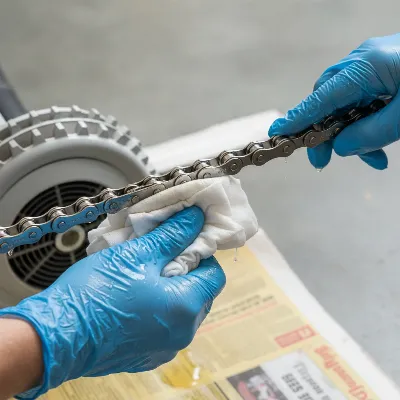 A person wearing gloves carefully applying oil to a rowing machine chain with a cloth, with newspaper protecting the floor
Distribute and Finish
Once the oil has been applied to the entire chain, slowly return the handle to its resting position. Then, sit on the rower and take a few gentle strokes. This action helps to evenly distribute the lubricant across all the chain links and into the internal mechanisms. After a few strokes, take a clean, dry cloth or paper towel and wipe off any excess oil from the chain. This step is crucial because leaving too much oil on the surface can attract dust, lint, and other debris, which will eventually make the chain dirty and gritty. A properly lubricated chain should feel smooth and look slightly damp, not greasy.
Optimal Maintenance Schedule and Troubleshooting
Regular maintenance is the cornerstone of a high-performing and durable rowing machine. Establishing a consistent schedule for chain lubrication, alongside other general care practices, will prevent common issues and extend the life of your equipment.
How Often Should You Lubricate?
The consensus among manufacturers and experts is to lubricate your rowing machine chain approximately every 50 hours of use. [cite: 1 (Keep your Erg Healthy), 2 (RX Thread), 4 (Model D Maintenance)] For home users who might row for an hour a few times a week, this could translate to roughly once a month or every three months. For institutional settings or very heavy users, a weekly lubrication schedule might be more appropriate. [cite: 1 (Model D Maintenance)] However, it’s also important to “listen” to your machine and visually inspect the chain. If you notice any of the aforementioned signs like noise, rough movement, or visible dryness before the 50-hour mark, it’s a good idea to lubricate it. Dusty environments can also necessitate more frequent oiling.
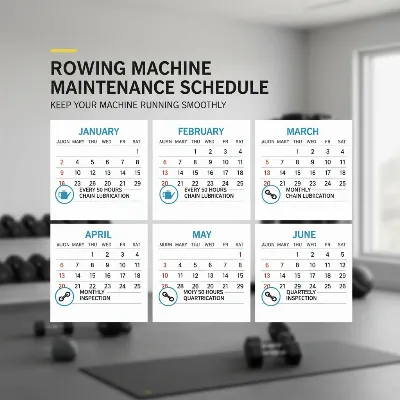 A calendar with marked dates illustrating a rowing machine chain lubrication schedule
Beyond Lubrication: General Chain Care
While lubrication is key, general cleaning also plays a vital role. After each workout, take a soft, dry cloth and gently wipe down the chain, especially if you notice any sweat or dust accumulation. This helps to keep the chain free of superficial debris without stripping away the lubricant. do not use harsh chemical cleaners or solvents on the chain, as these can dry out the metal and lead to corrosion. When storing your rowing machine, especially if it’s not used frequently, choose a cool, dry environment away from excessive dust or humidity to further prevent rust and grime buildup.
Common Lubrication Issues and Solutions
Even with proper maintenance, you might encounter a few issues. If your chain remains noisy or feels rough after lubrication, first check that you used the correct type and amount of lubricant. Ensure you thoroughly wiped off any excess, as too much oil can attract dirt and create a grinding sensation. If the issue persists, the chain might require a more thorough, careful cleaning (without harsh solvents) or a deeper inspection for stiff links that thorough lubrication couldn’t resolve. In such cases, or if you notice rust that cannot be easily wiped away, it might indicate a need for professional maintenance or even chain replacement. Conversely, if your chain is attracting too much dirt, it’s likely a sign of over-oiling; simply wipe the chain more thoroughly with a clean, dry cloth to remove the excess oil.
Conclusion
Maintaining your rowing machine chain is a simple yet profoundly impactful DIY task that ensures your fitness investment continues to deliver peak performance. By understanding why lubrication is essential, choosing the right products, and following a straightforward application process, you can prevent common issues like noise and wear while significantly extending the lifespan of your equipment. Regular chain maintenance, alongside general cleaning, guarantees a smooth, quiet, and efficient workout every time you pull the handle. Make it a routine, and your rowing machine will thank you with years of reliable, high-quality exercise.
What’s your go-to method for ing to lubricate your rowing machine chain?
Frequently Asked Questions
Can I use bicycle chain lube on my rowing machine chain?
It’s generally not recommended to use standard bicycle chain lube on a rowing machine chain unless the manufacturer specifically approves it. Many bike lubes are formulated for different environments and may be too thick, attract dirt, or contain solvents that are not suitable for rowing machine chains. Stick to lightweight machine oils or specialized rower chain lubricants.
How much oil should I use when lubricating the chain?
You only need a small amount, typically about one to two teaspoons, applied to a cloth or paper towel. The goal is a light, even coating, not to drench the chain. Too much oil can attract dust and grime, making the chain dirtier faster.
What happens if I don’t lubricate my rowing machine chain?
Ignoring chain lubrication can lead to increased friction, which causes accelerated wear and tear on both the chain and its sprocket. This results in a rough, noisy operation, potentially stiff links, and ultimately a shorter lifespan for your machine. It can also degrade your workout experience.
How do I know if my rowing machine chain needs oil?
Look and listen for the signs: a squeaking or grinding noise during use, a rough or less smooth feel when you pull the handle, or visible dryness, dirt, or light rust on the chain. If you notice any of these, it’s time to lubricate.
Can I use WD-40 to lubricate or clean my rowing machine chain?
No, you should not use WD-40 on your rowing machine chain. WD-40 is primarily a degreaser and water displacement spray, not a lubricant. It can strip away existing oils, attract more dirt, and potentially damage the chain over time. Always use recommended machine oils.
Equipment that holds up past 60 sessions
Free PDF — 60-session wear log template + 5 treadmills compared.
