The quest for a leaner physique, especially targeting stubborn belly fat, is a common fitness goal. While many exercises promise quick fixes, the reality often points to a more holistic approach. A rowing machine, often hailed as a full-body workout powerhouse, is a compelling tool in this journey. But can daily rowing truly help you shed that abdominal weight? This article examine the science behind fat loss, the unparalleled benefits of consistent rowing, and how to integrate this dynamic exercise into your daily routine to achieve your weight loss aspirations, including reducing belly fat.
Rowing Machine: Overview and Benefits
The rowing machine, or ergometer, simulates the motion of rowing a boat on water, providing a uniquely comprehensive workout experience. Its history is rooted in training competitive rowers, evolving into a highly effective fitness device accessible to everyone. Unlike many cardio machines that focus primarily on the lower body, rowing engages approximately 85-86% of your body’s muscles in a single, fluid motion. This includes the powerful leg muscles (quads, hamstrings, glutes), core (abdominals, obliques, lower back) for stability and power transfer, and the upper body (back, shoulders, biceps, triceps) for the pull phase.
There are several popular types of rowing machines, each offering a distinct feel and resistance mechanism:
- Magnetic Rowing Machine: Uses a magnetic brake system for quiet, smooth operation and easily adjustable resistance levels.
- Water Rowing Machine: Employs a flywheel spinning in a tank of water, mimicking the natural feel and sound of rowing on water, with resistance that self-adjusts based on stroke intensity.
- Air Rowing Machine: Utilizes a flywheel that generates resistance from air, providing a dynamic feel where resistance increases with your effort.
- Hydraulic Rowing Machine: Uses hydraulic cylinders to create resistance, often more compact and affordable, but may offer a less natural rowing stroke.
The health benefits of consistent rowing are extensive and holistic. From a cardiovascular perspective, it significantly elevates your heart rate, strengthening your heart and lungs, improving oxygen delivery throughout your body, and enhancing overall endurance. For muscle building, rowing provides a unique blend of cardio and strength training, helping to tone and strengthen major muscle groups across your entire body. It’s a highly efficient calorie burner. A moderate 30-minute rowing session can burn 250-400+ calories, with vigorous workouts burning even more, making it excellent for creating the caloric deficit needed for fat loss. Crucially, rowing is a low-impact exercise, placing minimal stress on your joints like knees and hips, making it suitable for individuals of all fitness levels, including those with joint concerns or recovering from injuries.
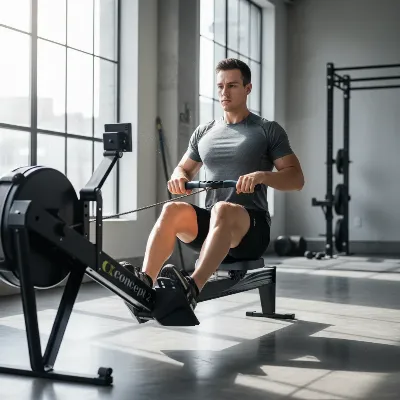 A person with good form on a rowing machine, showing full-body engagement in a brightly lit gym setting, realistic, dynamic angle, bright lighting
Guide to Choosing the Right Rowing Machine
Selecting the right rowing machine is pivotal for a sustainable and effective fitness journey. Your choice should align with your personal needs, fitness goals, and environmental considerations.
Determining Your Needs and Fitness Goals
|
Our Picks for the Best Rowing Machine in 2026
As an Amazon Associate I earn from qualifying purchases.
|
||
| Num | Product | Action |
|---|---|---|
| 1 | Rowing Machine for Home, 16 Resistance Levels, Quiet Magnetic Rower with APP, 350 LB Weight Capacity, Easy Assembly, Compact and Saves Space |

|
| 2 | Rowing Machines for Home,Water Rowing Machine with Foldable Design,400LBS Capacity,LCD Monitor,Smooth Glide Rails,Comfortable Seat,Free App(Bluetooth) Supported for Immersive Water Rower&Home Gym |
|
| 3 | Foldable Rowing Machines for Home with Adjustable Large Water Tank & Comfortable Seat for Real Experience Immersive Water Rower, APP Link,Joint 0 Impact 330LBS Weight Capacity; |
|
| 4 | Rowing Machines for Home, 16 Level Adjustable Resistance, Magnetic Rowing Machine with App Supported, 350 LB Weight Capacity, Upgraded Dual Slide Rails with LCD Data Display Screen |
|
| 5 | Rowing Machine for Home, Magnetic Rower Machine, 350 LB Weight Capacity, 16-Level Silent Resistance Row Machine for Gym Exercise Full-Body Workout Compact Rower with LCD Monitor Tablet Holder |
|
| 6 | Rowing Machine,Wenoker Magnetic Rower Machine for Home,App Supported 350 LB Weight Capacity, Smooth Whisper Quiet with LCD Monitor Tablet Holder & Comfortable Seat Cushion, Compact and Saves Space |
|
| 7 | MERACH Rowing Machines for Home, Magnetic Rowing Machine with 16 Levels, Rower Machine of Quiet Resistance, Dual Slide Rail with Max 350lbs Weight Capacity, App Compatible |
|
| 8 | Rowing Machine for Home, 350 LB Capacity, 16-Level Silent Resistance, Magnetic Rowing Machines for Home Foldable, Full-Body Workout Compact Rowing Machine for Cardio & Strength with APP Support |
|
| 9 | Rowing Machine Magnetic Rower with 16 Resistance Levels, Quiet Home Rowing Machine for Cardio Training, APP Connection, 160 kg Load Capacity, Vertical Storage |
|
| 10 | Rowing Machine,Wenoker Magnetic Rower Machine for Home,App Supported 350 LB Weight Capacity, Smooth Whisper Quiet with LCD Monitor Tablet Holder & Comfortable Seat Cushion, Compact and Saves Space |
|
Before investing, consider what you aim to achieve. Are you looking to reduce belly fat, improve cardiovascular health, build overall muscle, or simply maintain an active lifestyle?
- Fat Loss & Muscle Building: A rowing machine is excellent for both, as it combines cardio and strength. Consider models with adjustable resistance to progress with your strength.
- Cardiovascular Health: All types are beneficial, but dynamic resistance (air or water) can offer a more challenging cardio workout as your fitness improves.
- Beginner vs. Advanced: Beginners might appreciate the smooth, controlled resistance of magnetic rowers, while advanced users might seek the natural feel of water or the intense challenge of air resistance.
Understanding Different Rowing Machine Types
Each type of rowing machine offers a distinct experience:
- Magnetic Rowing Machine:
- Pros: Extremely quiet operation, smooth stroke, precise and easily adjustable resistance settings, often compact.
- Cons: Can sometimes lack the “real water” feel, resistance may not be as high as air or water for very advanced users.
- Best for: Home users prioritizing quiet workouts, apartments, controlled resistance, beginners to intermediate.
- Water Rowing Machine:
- Pros: Provides a very realistic and smooth rowing experience, resistance self-adjusts to your effort, natural whooshing sound can be meditative.
- Cons: Can be louder than magnetic, larger footprint, typically more expensive, maintenance involves water treatment.
- Best for: Users seeking an authentic rowing feel, willing to invest more, not overly concerned about noise.
- Air Rowing Machine:
- Pros: Dynamic resistance that increases with your effort, excellent for high-intensity training, very durable, often used in gyms and competitive settings.
- Cons: Can be quite noisy due to the fan, less smooth than magnetic or water for some.
- Best for: Serious athletes, those focused on power and high-intensity workouts, gym environments.
- Hydraulic Rowing Machine:
- Pros: Most compact and often the most affordable, good for small spaces.
- Cons: Can provide a less natural or even stroke, resistance often limited and less dynamic, durability can vary.
- Best for: Budget-conscious buyers, those with very limited space, casual users.
Key Factors to Consider
Several practical factors should influence your decision:
- Size and Weight: Measure your workout space. Many rowers fold or stand upright for storage.
- Resistance Level: Ensure the machine offers enough resistance for your current fitness level and allows for progression. Adjustable resistance is key for long-term use.
- Display Monitor and Features: A good monitor tracks crucial metrics like distance, time, strokes per minute, calories burned, and even heart rate. Some models offer pre-programmed workouts or connectivity with fitness apps.
- Noise Level: This is particularly important for home users, especially in shared living spaces. Magnetic rowers are the quietest, followed by water, then air.
- Durability and Material Quality: Look for sturdy construction from reputable brands. A well-built machine will last longer and provide a safer workout.
- Price: Set a budget. While hydraulic rowers are generally the cheapest, investing in a mid-range magnetic, air, or water rower often provides better long-term value and a superior workout experience.
Comparing Popular Rowing Machine Models
Understanding the nuances between different rowing machine types is essential when making an informed purchasing decision, especially when aiming for fitness goals like fat loss.
| Feature | Magnetic Rowing Machine | Water Rowing Machine | Air Rowing Machine | Hydraulic Rowing Machine |
|---|---|---|---|---|
| Noise Level | Low | Medium | High | Low to Medium |
| Rowing Feel | Smooth, consistent | Realistic, natural | Powerful, dynamic | Less natural, often choppy |
| Price Range | Medium | High | Medium to High | Low |
| Durability | High | Medium to High | High | Medium |
| Resistance | Electronically adjustable | Self-adjusting (water volume) | Self-adjusting (effort) | Fixed or manually adjustable |
- Magnetic Rowing Machines offer a smooth and quiet workout, making them ideal for home use where noise is a concern. Their electronically adjustable resistance allows for precise control, suitable for progressive training aimed at calorie burning and muscle toning.
- Water Rowing Machines provide the most authentic rowing experience, mimicking the natural resistance of water. This makes for an engaging and effective full-body workout that can significantly contribute to calorie expenditure and fat loss. However, their larger size and higher cost might be considerations.
- Air Rowing Machines are renowned for their dynamic resistance, which directly corresponds to the intensity of your stroke. This makes them excellent for high-intensity interval training (HIIT), a proven method for maximizing calorie burn and boosting metabolism, crucial for losing belly fat. They are durable and often found in commercial gyms.
- Hydraulic Rowing Machines are often the most compact and budget-friendly. While they may not offer the same smooth, full-body feel as other types, they can still provide a decent cardio workout for general fitness and modest calorie burn, suitable for very small spaces or beginners on a tight budget.
> “The effectiveness of a rowing machine for fat loss lies not just in its ability to burn calories, but in its unique capacity to engage nearly all major muscle groups simultaneously, leading to a higher metabolic demand both during and after your workout.” – Dr. Emily R. Thorne, Exercise Physiologist
Where to Buy a Rowing Machine: Top Brands
When you’re ready to purchase a rowing machine, you have several reliable avenues. Both physical sports stores and online retailers offer a wide selection, each with its advantages.
Popular Buying Channels:
- Specialty Sports Stores: These stores allow you to physically try out different models, assess their size, and get advice from sales associates. However, their selection might be limited, and prices could be higher.
- Online Retailers (Amazon, manufacturer websites): Offer a vast selection, competitive pricing, and convenient home delivery. Reading customer reviews and checking return policies are crucial when buying online.
Reputable Rowing Machine Brands:
- Concept2: Widely considered the gold standard in rowing, especially their Model D and E. Known for exceptional durability, performance, and accurate metrics, often used in competitive rowing and gyms. They primarily offer air resistance.
- WaterRower: Famous for their beautifully crafted wooden water rowers, offering a smooth, natural rowing feel and a pleasant aesthetic that blends into home decor.
- Hydrow: A premium brand offering smart rowers with interactive, on-demand workouts led by world-class athletes, providing an immersive experience. These are generally magnetic resistance.
- NordicTrack: Offers feature-rich rowers with iFit connectivity, allowing access to a vast library of guided workouts and virtual scenic rows. Often magnetic or air/magnetic hybrid.
- Sunny Health & Fitness / XTERRA: Provide more budget-friendly options, often magnetic or hydraulic, suitable for beginners or those with smaller budgets.
When purchasing online, always:
- Read Customer Reviews: Pay attention to comments regarding assembly, durability, noise, and customer service.
- Verify Return Policies: Understand the terms for returns, exchanges, and warranty, especially for larger equipment.
- Check Shipping Costs: Factor in delivery fees, which can sometimes be substantial for heavy items.
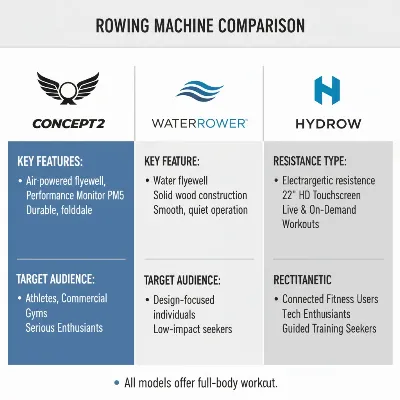 A clean graphic comparing three top rowing machine brands (Concept2, WaterRower, Hydrow) with their logos and key features, on a white background, infographic style
How to Use and Maintain Your Rowing Machine
To maximize the benefits of your rowing machine for fat loss and overall fitness, proper usage and consistent maintenance are key. Incorrect form can lead to injury and reduce workout effectiveness.
Correct Rowing Technique to Avoid Injury
The rowing stroke consists of four main phases:
- The Catch: Start with knees bent, shins vertical, arms extended, and torso leaned slightly forward at the hips. Shoulders should be relaxed.
- The Drive: Initiate with a powerful leg push, extending your legs. As your legs extend, hinge back slightly at the hips, then pull the handle towards your lower rib cage, engaging your core and back. Your arms finish the stroke. This phase should be a smooth, continuous movement – “legs, core, arms.”
- The Finish: Legs are fully extended, torso leaned slightly back, and handle is at your lower ribs.
- The Recovery: Reverse the drive phase smoothly – “arms, core, legs.” Extend arms, hinge forward at the hips, then bend your knees to slide back to the catch position.
> “Many beginners make the mistake of pulling primarily with their arms. 60% of the power in a rowing stroke comes from your legs. Focus on driving powerfully through your heels.” – Coach Alex P. Chen, Certified Rowing Instructor
Basic and Advanced Rowing Workouts
- Basic Steady-State (for endurance and fat burning): Row at a moderate, consistent pace where you can hold a conversation. Aim for 20-30 minutes, 3-5 times a week. This is excellent for sustained calorie burn.
- High-Intensity Interval Training (HIIT): Alternate short bursts of maximum effort rowing with periods of low-intensity recovery. Example: 30 seconds max effort, 60 seconds easy recovery, repeat 8-10 times after a warm-up. HIIT significantly boosts metabolism and the “afterburn” effect.
- Pyramid Workouts: Increase your rowing distance or time incrementally, then decrease. Example: Row 200m, rest; 300m, rest; 400m, rest; then 300m, rest; 200m. This challenges both endurance and power.
Maintaining Your Rowing Machine
Regular maintenance ensures longevity and optimal performance:
- Clean Regularly: Wipe down the rail, seat, and handle after each use to remove sweat and prevent corrosion.
- Check for Loose Parts: Periodically inspect screws, bolts, and connections. Tighten as needed.
- Lubricate (if applicable): Some models (e.g., chain-driven air rowers) may require occasional lubrication of moving parts according to the manufacturer’s instructions.
- Inspect Resistance System: For water rowers, check water levels and add purification tablets as recommended. For magnetic and air rowers, ensure the flywheel and damper (air) are clear of debris.
- Store Properly: If your machine folds or stands, ensure it’s stored safely to prevent damage.
Buying Guide: Your Roadmap to Rowing Success
Investing in a rowing machine is a commitment to your health and fitness. This buying guide summarizes the critical factors and offers advice to help you make the best choice for achieving your belly fat loss goals and overall well-being.
Summary of Key Considerations:
- Goal Alignment: Prioritize machines that align with your primary objective, whether it’s high-intensity calorie burning, low-impact cardio, or muscle toning. that overall fat loss, aided by rowing and diet, is key for reducing belly fat.
- Resistance Type: Choose based on your preference for feel, noise, and intensity requirements (magnetic for quiet, water for natural, air for intense).
- Space & Budget: Consider your available space and financial investment. Compact and affordable hydraulic options exist, but higher-end models often offer greater durability and a better workout experience.
- Features: Look for a clear monitor, adjustable footrests, a comfortable seat, and potentially smart features for guided workouts if that motivates you.
- Brand Reputation: Stick with established brands known for quality and customer support to ensure a lasting investment.
Advice for Beginners:
- Focus on Form First: Before chasing speed or distance, spend time mastering the proper rowing technique. This prevents injury and makes your workouts more effective. Watching instructional videos and even rowing in front of a mirror can be helpful.
- Start Gradually: Begin with shorter, moderate-intensity sessions (15-20 minutes, 3-4 times a week) and gradually increase duration or intensity as your stamina and strength improve. Consistency is more important than initial intensity.
- Listen to Your Body: Pay attention to any discomfort. Rowing is low-impact, but overtraining can still lead to soreness or injury. Incorporate rest days.
Common Rowing Machine Mistakes and How to Fix Them:
- Arm-Pulling Too Early: Starting the pull with your arms before your legs drive back. Fix: Focus on the “legs, core, arms” sequence on the drive and “arms, core, legs” on the recovery.
- Hunching Your Back: Rounded back during the catch or drive. Fix: Maintain a strong, neutral spine throughout the stroke, engaging your core.
- Over-Reaching: Leaning too far forward at the catch. Fix: Keep your shins vertical and torso angled slightly forward, maintaining a strong, engaged core.
- Lack of Full Leg Drive: Not fully extending legs during the drive. Fix: Push powerfully through your heels until your legs are straight.
- Going Too Hard, Too Soon: Overexerting yourself, leading to poor form or burnout. Fix: Prioritize good form and steady pace, gradually increasing intensity.
By understanding these elements, you can confidently choose a rowing machine that becomes a cornerstone of your fitness regimen, helping you effectively pursue your goals of losing belly fat and achieving overall health.
Conclusion
The journey to losing belly fat and improving overall health is multifaceted, and the rowing machine stands out as an exceptionally powerful tool within this process. While “spot reduction” of fat is a myth, consistent daily rowing, when combined with a balanced diet, is incredibly effective for overall calorie expenditure and muscle building, both of which are crucial for reducing body fat, including that around the midsection. Its full-body engagement, significant calorie-burning potential, and low-impact nature make it an accessible and sustainable exercise for nearly everyone.
By committing to proper technique, varying your workouts, and consistently incorporating rowing into your routine, you’ll not only see a reduction in belly fat but also experience enhanced cardiovascular health, increased strength, and improved endurance. that patience and consistency are your greatest allies.
What steps will you take today to integrate daily rowing into your fat loss strategy and unlock its transformative benefits?
Frequently Asked Questions
Can a rowing machine specifically target belly fat?
No, a rowing machine cannot specifically target belly fat. The concept of “spot reduction” is a myth; fat loss occurs throughout the body as a result of overall calorie deficit and increased metabolism. However, rowing is highly effective for total body fat loss, which naturally includes the reduction of belly fat over time, especially when combined with a healthy diet.
How often should I use a rowing machine to see results for fat loss?
For noticeable fat loss results, aim to use a rowing machine 3-5 times per week for at least 20-30 minutes per session. Consistency is more crucial than daily high-intensity workouts, particularly for beginners. Incorporating a mix of steady-state cardio and high-intensity interval training (HIIT) can maximize calorie burn and metabolic boost.
Is rowing better for fat loss than other cardio exercises like running or cycling?
Rowing is highly competitive with other cardio exercises for fat loss because it engages approximately 85-86% of your body’s muscles simultaneously, leading to a higher overall calorie expenditure compared to exercises that focus on fewer muscle groups. It also offers a unique blend of cardiovascular and strength training benefits in a low-impact format.
What kind of diet should I follow when using a rowing machine to lose belly fat?
To lose belly fat effectively with a rowing machine, you must create a caloric deficit. Focus on a balanced diet rich in whole foods, lean proteins, fruits, vegetables, and healthy fats, while limiting processed foods, sugary drinks, and excessive unhealthy fats. Hydration is also key.
Is a rowing machine good for beginners who want to lose weight?
Absolutely. Rowing is excellent for beginners because it’s a low-impact exercise that can be easily adjusted to suit any fitness level. Focusing on proper form at a moderate pace will help build a strong foundation without excessive strain on joints, making it a safe and effective starting point for weight loss.
Can daily rowing lead to overtraining or injury?
While rowing daily is feasible, doing the same high-intensity or long-duration routines every day can increase the risk of overtraining or injury. To avoid this, vary your workouts by alternating intensity, duration, and incorporating rest days or active recovery. Listening to your body and ensuring proper form are essential for sustainable daily use.
Equipment that holds up past 60 sessions
Free PDF — 60-session wear log template + 5 treadmills compared.
