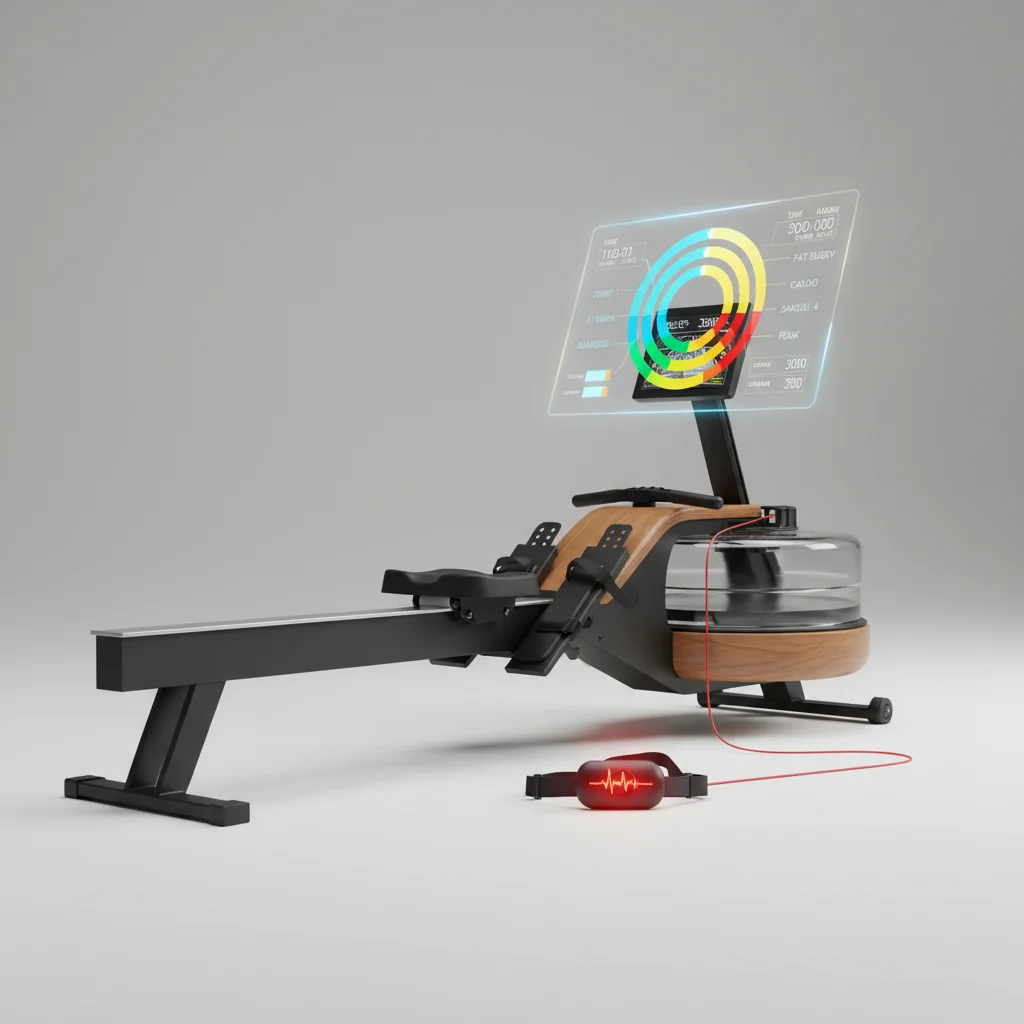
To maximize your cardio workout on a rowing machine, you should aim to spend at least 20-30 minutes within your target heart rate zones, typically ranging from 60% to 85% of your maximum heart rate, depending on your fitness goals. Understanding these zones allows you to tailor your intensity for fat burning, endurance building, or high-intensity interval training (HIIT).
Understanding Your Maximum Heart Rate
Your maximum heart rate (MHR) is the highest number of beats your heart can achieve during strenuous exercise. A common, though approximate, formula to estimate your MHR is 220 minus your age. For example, a 30-year-old would have an estimated MHR of 190 beats per minute (bpm). While this formula provides a good starting point, individual variations exist, and more precise measurements can be obtained through fitness tests.
The Five Heart Rate Zones for Rowing
There are generally five heart rate zones, each serving a different purpose in your rowing workout. The first, Zone 1 (50-60% MHR), is for very light activity and recovery. Zone 2 (60-70% MHR), often called the fat-burning zone, is ideal for longer, steady-state rows. Zone 3 (70-80% MHR) improves aerobic fitness and endurance. Zone 4 (80-90% MHR) is for high-intensity training, boosting anaerobic threshold. Finally, Zone 5 (90-100% MHR) is for peak effort, typically in short bursts during interval training.
- Zone 1 (50-60% MHR): Recovery and warm-up
- Zone 2 (60-70% MHR): Fat burning and endurance base
- Zone 3 (70-80% MHR): Aerobic fitness and stamina improvement
- Zone 4 (80-90% MHR): Anaerobic threshold and speed work
- Zone 5 (90-100% MHR): Maximum effort and sprint training
Calculating Your Target Heart Rate for Specific Goals
|
Our Picks for the Best Rowing Machine in 2026
As an Amazon Associate I earn from qualifying purchases.
|
||
| Num | Product | Action |
|---|---|---|
| 1 | Rowing Machine,Wenoker Magnetic Rower Machine for Home,App Supported 350 LB Weight Capacity, Smooth Whisper Quiet with LCD Monitor Tablet Holder & Comfortable Seat Cushion, Compact and Saves Space |

|
| 2 | MERACH Rowing Machines for Home, Magnetic Rowing Machine with 16 Levels, Rower Machine of Quiet Resistance, Dual Slide Rail with Max 350lbs Weight Capacity, App Compatible |
|
| 3 | Rowing Machines for Home,Water Rowing Machine with Foldable Design,400LBS Capacity,LCD Monitor,Smooth Glide Rails,Comfortable Seat,Free App(Bluetooth) Supported for Immersive Water Rower&Home Gym |
|
| 4 | Rowing Machine for Home, 16 Resistance Levels, Quiet Magnetic Rower with APP, 350 LB Weight Capacity, Easy Assembly, Compact and Saves Space |
|
| 5 | Rowing Machine,Wenoker Magnetic Rower Machine for Home,App Supported 350 LB Weight Capacity, Smooth Whisper Quiet with LCD Monitor Tablet Holder & Comfortable Seat Cushion, Compact and Saves Space |
|
| 6 | Foldable Rowing Machines for Home with Adjustable Large Water Tank & Comfortable Seat for Real Experience Immersive Water Rower, APP Link,Joint 0 Impact 330LBS Weight Capacity; |
|
| 7 | Rowing Machine for Home, Magnetic Rower Machine, 350 LB Weight Capacity, 16-Level Silent Resistance Row Machine for Gym Exercise Full-Body Workout Compact Rower with LCD Monitor Tablet Holder |
|
| 8 | Rowing Machine for Home, 350 LB Capacity, 16-Level Silent Resistance, Magnetic Rowing Machines for Home Foldable, Full-Body Workout Compact Rowing Machine for Cardio & Strength with APP Support |
|
| 9 | Rowing Machine Magnetic Rower with 16 Resistance Levels, Quiet Home Rowing Machine for Cardio Training, APP Connection, 160 kg Load Capacity, Vertical Storage |
|
| 10 | Rowing Machines for Home, 16 Level Adjustable Resistance, Magnetic Rowing Machine with App Supported, 350 LB Weight Capacity, Upgraded Dual Slide Rails with LCD Data Display Screen |
|
Once you know your MHR, you can calculate your target heart rate for each zone. For instance, if your MHR is 180 bpm and you want to train in Zone 3 (70-80%), your target heart rate would be between 126 bpm (180 x 0.70) and 144 bpm (180 x 0.80). Many modern rowing machines come equipped with heart rate monitors or are compatible with external chest straps, making it easy to track your intensity in real-time.
Integrating Heart Rate Training into Your Rowing Routine
To effectively use heart rate zones, vary your workouts. Dedicate some sessions to steady-state rowing in Zone 2 or 3 for endurance. Incorporate interval training where you alternate between high-intensity bursts in Zone 4 or 5 and recovery periods in Zone 1 or 2. This variety not only prevents plateaus but also targets different energy systems, leading to more comprehensive fitness improvements. Always listen to your body and adjust your intensity as needed.
Monitoring Your Heart Rate During Rowing
Accurate heart rate monitoring is crucial for effective zone training. While some rowing machines have built-in pulse sensors on the handles, chest strap monitors often provide more consistent and accurate readings. Wearable fitness trackers can also be used, though their accuracy can vary during dynamic movements like rowing. Regularly checking your heart rate allows you to make immediate adjustments to your stroke rate and power output to stay within your desired zone.
Equipment that holds up past 60 sessions
Free PDF — 60-session wear log template + 5 treadmills compared.
