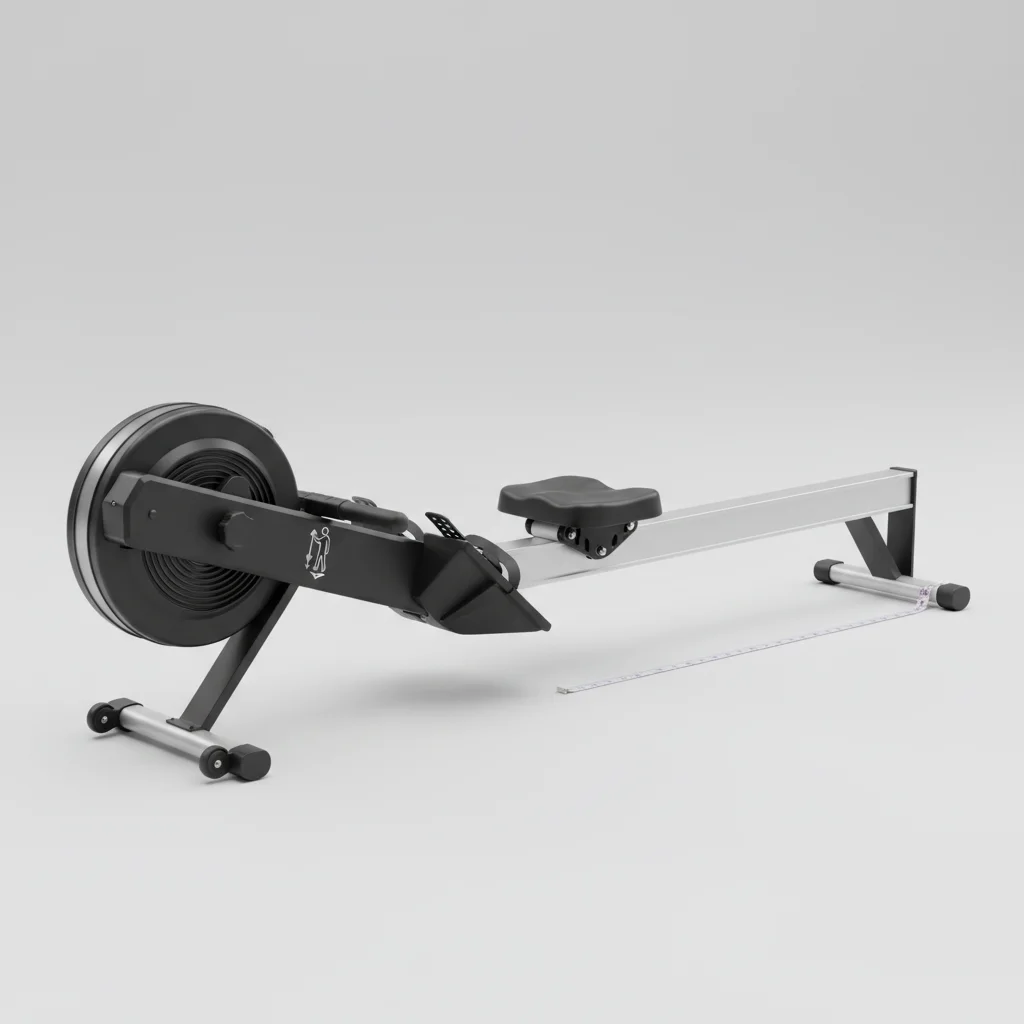
Proper rowing machine setup for your height is crucial for an effective and injury-free workout. The ideal adjustment involves three key areas: foot stretchers, seat position, and handle reach. For most individuals, the foot stretchers should be set so the strap crosses the widest part of your foot, allowing your heels to lift naturally at the catch. The seat should allow for a full range of motion without hyperextension at the finish, and the handle should be reachable without straining your shoulders or back.
Optimizing Foot Stretcher Placement for Your Height
The foot stretchers are the foundation of your rowing stroke. To optimize their placement for your height, sit on the rower and place your feet into the stretchers. Adjust the height so that the strap comfortably crosses the ball of your foot, just below your toes. This position ensures that your heels can lift slightly during the drive phase, which is essential for engaging your glutes and hamstrings. If the stretchers are too high, your knees might feel jammed at the catch; too low, and you might struggle to generate power from your legs. Experiment with one or two notches up or down from this initial position to find what feels most natural and powerful for your body.
Adjusting Seat Position for Leg Drive and Reach
While most rowing machine seats are fixed in their track, your effective seat position is influenced by how far forward you can comfortably reach at the catch and how far back you can extend at the finish. For taller individuals, ensuring a full extension at the finish without locking out the knees is important. Shorter individuals should focus on achieving a deep catch position without excessive rounding of the back. The goal is to maximize leg drive, which accounts for approximately 60% of your rowing power. Ensure your knees are not splayed out or caving in; they should track directly over your feet throughout the stroke.
Handle Reach and Ergonomics for Upper Body Engagement
|
Our Picks for the Best Rowing Machine in 2026
As an Amazon Associate I earn from qualifying purchases.
|
||
| Num | Product | Action |
|---|---|---|
| 1 | Rowing Machine,Wenoker Magnetic Rower Machine for Home,App Supported 350 LB Weight Capacity, Smooth Whisper Quiet with LCD Monitor Tablet Holder & Comfortable Seat Cushion, Compact and Saves Space |

|
| 2 | Rowing Machine,Wenoker Magnetic Rower Machine for Home,App Supported 350 LB Weight Capacity, Smooth Whisper Quiet with LCD Monitor Tablet Holder & Comfortable Seat Cushion, Compact and Saves Space |
|
| 3 | Foldable Rowing Machines for Home with Adjustable Large Water Tank & Comfortable Seat for Real Experience Immersive Water Rower, APP Link,Joint 0 Impact 330LBS Weight Capacity; |
|
| 4 | Rowing Machine Magnetic Rower with 16 Resistance Levels, Quiet Home Rowing Machine for Cardio Training, APP Connection, 160 kg Load Capacity, Vertical Storage |
|
| 5 | Rowing Machine for Home, Magnetic Rower Machine, 350 LB Weight Capacity, 16-Level Silent Resistance Row Machine for Gym Exercise Full-Body Workout Compact Rower with LCD Monitor Tablet Holder |
|
| 6 | Rowing Machine for Home, 350 LB Capacity, 16-Level Silent Resistance, Magnetic Rowing Machines for Home Foldable, Full-Body Workout Compact Rowing Machine for Cardio & Strength with APP Support |
|
| 7 | Rowing Machines for Home, 16 Level Adjustable Resistance, Magnetic Rowing Machine with App Supported, 350 LB Weight Capacity, Upgraded Dual Slide Rails with LCD Data Display Screen |
|
| 8 | Rowing Machines for Home,Water Rowing Machine with Foldable Design,400LBS Capacity,LCD Monitor,Smooth Glide Rails,Comfortable Seat,Free App(Bluetooth) Supported for Immersive Water Rower&Home Gym |
|
| 9 | MERACH Rowing Machines for Home, Magnetic Rowing Machine with 16 Levels, Rower Machine of Quiet Resistance, Dual Slide Rail with Max 350lbs Weight Capacity, App Compatible |
|
| 10 | Rowing Machine for Home, 16 Resistance Levels, Quiet Magnetic Rower with APP, 350 LB Weight Capacity, Easy Assembly, Compact and Saves Space |
|
The handle reach is critical for engaging your upper body and core effectively. At the catch, your arms should be extended but not locked, and your shoulders should be relaxed. As you drive back, the handle should come towards your sternum, just below your ribs. If you find yourself reaching too far or pulling the handle too high or low, your setup might need adjustment. Sometimes, simply being mindful of your posture and engaging your core can improve your handle reach. Avoid shrugging your shoulders or using excessive arm strength; the power should come from your legs and core, with your arms acting as connectors.
Fine-Tuning Your Damper or Resistance Setting
While not directly related to physical dimensions, the damper or resistance setting significantly impacts your workout feel and can be adjusted based on your preference and fitness level. A higher damper setting on air resistance rowers mimics a heavier, slower boat, requiring more strength. A lower setting is like a lighter, faster boat, emphasizing cardiovascular endurance. For water rowers, the water level determines resistance. Magnetic rowers offer distinct resistance levels. Experiment to find a setting that allows you to maintain good form throughout your workout without fatiguing too quickly or feeling like the workout is too easy. Most beginners start with a medium setting and adjust from there.
Why Proper Setup Prevents Injury and Maximizes Results
An improperly set up rowing machine can lead to various issues, from lower back pain and knee strain to shoulder discomfort. Correct adjustments ensure that your body moves through its natural range of motion, distributing the workload evenly across your major muscle groups. This not only prevents injury but also maximizes the effectiveness of each stroke, leading to better calorie burn, improved cardiovascular health, and stronger muscles. Taking the time to fine-tune your machine to your body’s specific needs is an investment in your long-term fitness journey.
- Ensure foot straps are snug but not overly tight.
- Maintain a neutral spine throughout the entire stroke.
- Keep your shoulders relaxed and down, away from your ears.
- Focus on a strong leg drive before engaging your core and arms.
- Listen to your body and make small adjustments as needed.
Equipment that holds up past 60 sessions
Free PDF — 60-session wear log template + 5 treadmills compared.
